
Courier ServicesLogistics
Quick Summary
- The Corridor: The 300km stretch of the QEII is the primary focus for high-frequency Alberta freight.
- Service Variety: Effective logistics requires a mix of expedited freight and LTL services and dedicated hot shots.
- Route Optimization: Modern logistics in 2026 rely on predictive traffic modelling to bypass congestion in Red Deer and Airdrie.
- The Mid-Point Factor: Red Deer serves as a critical strategic node for cross-docking and driver swaps.
- Cost Efficiency: Consolidating smaller shipments into daily scheduled freight routes provides the best balance of speed and price.
- Risk Management: Success depends on having a robust plan for the frequent weather-related disruptions on Highway 2.
- Visibility: Real-time GPS tracking is now the industry standard for inter-city transit.
The Queen Elizabeth II Highway (QEII) is the most critical economic artery in Western Canada, facilitating a constant flow of goods between Alberta’s two largest metropolitan hubs. For logistics managers, operations directors, and e-commerce leaders, the ability to maintain a seamless connection between Edmonton and Calgary is not just a convenience—it is a competitive necessity. If your objective is to reduce inter-city transit times, minimize shipping costs per pallet, and build a resilient supply chain that can withstand the unique geographic and climatic challenges of the Alberta corridor, this guide provides the technical framework to achieve those goals. By the end of this analysis, you will understand how to leverage modern freight strategies to optimize your daily cargo movements and ensure 100% reliability for your time-sensitive shipments.
The Strategic Importance of the Edmonton-Calgary Link
The Edmonton-Calgary corridor houses over 75% of Alberta’s population and a significant majority of its industrial and retail activity. As supply chains move toward just-in-time delivery models in 2026, the demand for daily scheduled freight routes has reached an all-time high.
Unlike long-haul trucking, the Edmonton-to-Calgary run is a sprint. A truck can realistically complete a round trip within a single driver’s legal hours of service, provided the loading and unloading processes are optimized. However, the simplicity of the 300km drive is often deceptive. Factors such as urban congestion in the Balzac industrial area, construction at the Red Deer interchanges, and the volatile Alberta weather require a sophisticated approach to daily freight.
The Inter-City Logistics Efficiency Framework
To maximize the efficiency of daily freight, we recommend a conceptual model known as the Tri-Node Synchronicity Framework. This model treats the Edmonton hub, the Calgary hub, and the Red Deer transit point as a single, synchronized system rather than isolated stops.
1. The Pre-Transit Stage (Edmonton/Nisku)
Optimization begins at the point of origin. For shipments leaving Edmonton, the focus is on early-morning consolidation. By staging freight at a central depot near the Anthony Henday or the Nisku industrial park by 06:00, carriers can ensure that trucks are on the QEII before the morning rush.
2. The Transit Corridor (The QEII)
In 2026, the transit stage is managed through AI-driven route optimization. This involves monitoring live feeds from 511 Alberta to detect collisions or weather-related slowdowns. If the QEII is blocked, experienced carriers utilize Highway 2A or Highway 21 as secondary arteries to keep freight moving.
3. The Last-Mile Stage (Calgary/Airdrie)
The final stage is often the most complex. Deliveries into Calgary must account for the heavy industrial traffic in the Northeast and the logistical density of the Balzac corridor. Success here depends on having local delivery units ready to receive line-haul trailers and break them down for immediate local distribution.
Technical Comparison: Shipping Modes for the Alberta Corridor
Choosing the right mode of transport is the most significant factor in managing your logistics budget. The following table compares the three most common methods for moving goods between Edmonton and Calgary.
Alberta Inter-City Freight Comparison Table
| Service Mode | Transit Time | Ideal Load Size | Best Use Case |
| LTL (Less-Than-Truckload) | 24 Hours | 1–6 Pallets | Routine retail and industrial replenishment |
| Dedicated FTL (Full Truckload) | Same Day | 24–26 Pallets | High-volume manufacturing supply chains |
| Hot Shot / Expedited | 3.5–4 Hours | Single Part to 10,000 lbs | Emergency hot shot services for critical failures |
| Scheduled Courier | Fixed Daily | Small parcels / Envelopes | Legal, medical, and administrative documents |
If you are unsure which mode fits your current volume, the most effective first step is to get a freight shipping quote that outlines the cost-benefit ratio for your specific cargo.
Realistic Logistics Constraints on the QEII
While modern technology has improved freight reliability, several hard constraints remain constant in the Alberta market. Understanding these is essential for setting realistic expectations with your customers.
- The Red Deer Merge: The merge points in Red Deer remain a persistent bottleneck. Heavy traffic volumes between 15:30 and 17:30 frequently add 20–40 minutes to the transit time.
- Electronic Logging Device (ELD) Mandates: Drivers are strictly limited in their driving hours. A delay of two hours due to a winter storm can prevent a driver from completing a return trip, necessitating a driver swap or an overnight stay.
- Dimensional Limitations: While the QEII is a high-load corridor, specialized oversized loads require specific permits that can only be used during daylight hours. This can significantly impact the timing of heavy equipment moves.
- The Balzac Bottleneck: The rapid growth of distribution centers north of Calgary has led to significant congestion at the Highway 566 interchange, affecting morning delivery windows.
Local Considerations for Edmonton and Calgary Locations
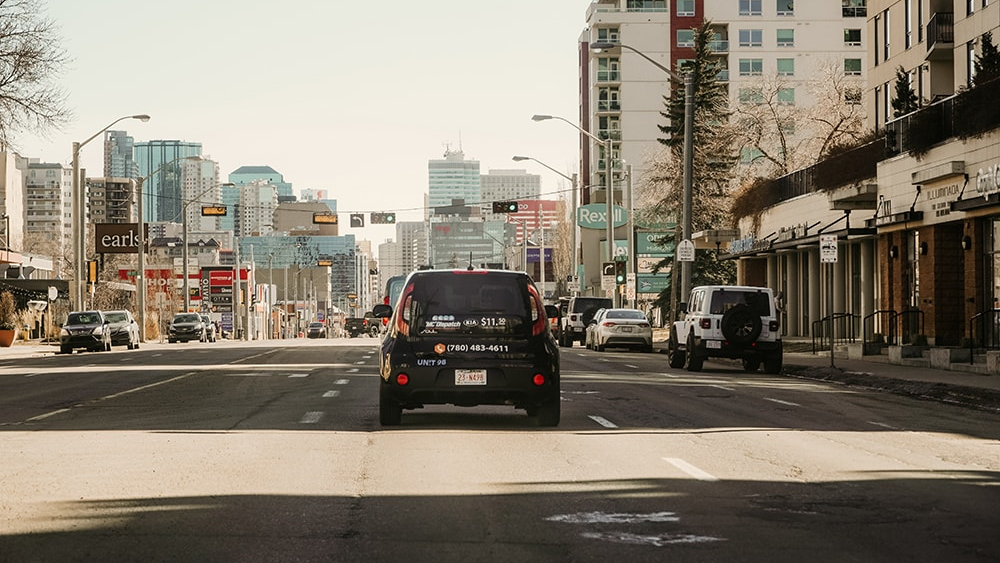
Each city has its own logistical personality. In Edmonton, the majority of freight originates in the South (Nisku/Leduc) or the West (Acheson). This proximity to the QEII allows for quick departures.
In Calgary, the logistics hub is concentrated in the Northeast and Southeast industrial parks. Accessing these areas during the afternoon peak requires drivers who understand the secondary routes through the city’s ring road (Stoney Trail). Furthermore, carriers must be compliant with the latest industry standards as outlined by Supply Chain Canada to ensure they are meeting the safety and professional requirements of Alberta’s top-tier industrial sites.
Step-by-Step Checklist: Preparing Your Daily Freight for Success
To ensure your shipment is optimized for the QEII sprint, follow this pre-shipment checklist every day.
- Verify Loading Docks: Confirm that both the origin and destination have the equipment (forklift, power tailgate, or dock) required for the vehicle type.
- Manifest Accuracy: Ensure the Bill of Lading (BOL) clearly states the number of pieces, total weight, and any special handling instructions.
- Timing Alignment: Aim for a pickup time before 10:00 AM to ensure same-day or next-morning delivery in the opposing city.
- Pallet Integrity: Ensure all pallets are shrink-wrapped and corner-protected to withstand the vibrations of a 110km/h highway transit.
- Documentation: Provide digital copies of customs paperwork if the freight is continuing to an international destination from a Calgary or Edmonton bonded warehouse.
- Contact Synchronization: Confirm that the receiving contact is available for the projected delivery window to avoid costly redelivery fees.
Common Mistakes in Edmonton-Calgary Freight Management
Avoiding these frequent errors can save your organization thousands in annual logistics spend.
- Treating Inter-City Freight as Long-Haul: Many managers apply long-haul pricing and timelines to the QEII. This leads to overpaying for service levels that don’t match the 300km distance.
- Ignoring the Winter Factor: Failing to account for “Black Ice” or “Whiteout” conditions between Leduc and Red Deer often leads to broken promises to customers.
- Under-utilizing Consolidation: Shipping three separate pallets on three different days is significantly more expensive than a single weekly LTL shipment.
- Neglecting the Last Mile: A truck can make it from Edmonton to Calgary in three hours, but if the local delivery takes five hours due to poor routing, the speed advantage is lost.
What To Do If Something Goes Wrong
In the event of a delay or a logistical failure on the QEII, follow this protocol to minimize the impact.
1. Immediate Communication: The moment a delay is detected via GPS or driver report, notify the receiver. Transparency is the most effective tool for managing customer expectations.
2. Evaluate Rerouting Options: If the QEII is closed due to an accident, determine if the cargo is critical enough to warrant the extra time and fuel for a detour through Highway 21 or Highway 22.
3. Transload if Necessary: If a vehicle experiences a mechanical failure, the fastest solution is often to dispatch a second unit to the roadside for a transload rather than waiting for a tow and repair.
4. Documentation of Claims: In the rare event of cargo damage, take high-resolution photos before the freight is moved from the truck and note all discrepancies on the POD (Proof of Delivery) immediately. Review transparent courier pricing to understand insurance coverage limits.
Optimized Workflow: The Daily Freight Sprint
The following workflow represents an idealized process for moving high-priority freight between the two hubs.
- 08:00: Freight is staged and labelled at the Edmonton warehouse.
- 09:30: The carrier arrives for pickup, prioritizing the heaviest and most complex loads first.
- 11:00: The vehicle enters the QEII corridor, moving south toward Red Deer.
- 12:30: Mid-point check-in; the dispatcher monitors traffic and weather patterns for the Calgary entry.
- 14:00: The vehicle arrives at the Calgary distribution center for offloading or cross-docking.
- 15:30: Final delivery is completed to the end customer before the business closes.
FAQ: Edmonton to Calgary Daily Freight
What is the typical cutoff time for same-day delivery between Edmonton and Calgary?
To guarantee same-day delivery, freight typically needs to be ready for pickup by 09:00 AM. This allows the driver to clear the city and complete the transit and unloading within a standard business day.
Do you handle refrigerated or temperature-controlled freight on this route?
Yes, the Edmonton-Calgary corridor is a major route for food and pharmaceutical products. Specialized reefers are frequently used for daily runs to maintain the cold chain.
How do winter storms affect the daily freight schedule?
Safety is the priority. During extreme weather, trucks may be held back, or speed may be reduced. This typically results in a 2–4 hour delay, and carriers will provide updated ETAs based on road conditions from 511 Alberta.
Is it cheaper to ship by LTL or dedicated hotshot?
LTL is significantly more cost-effective for 1–6 pallets because the cost of the truck is shared with other shippers. Hot shot services are premium options used when speed is more important than price.
Can I track my shipment in real-time?
Yes, in 2026, most professional carriers provide a digital tracking link that shows the vehicle’s GPS location and the estimated time of arrival at the destination.
Do you offer tail-lift or power tailgate service in Calgary?
Yes, power tailgates are essential for deliveries to retail locations or businesses without a loading dock. This must be requested at the time of the quote to ensure the correct vehicle is dispatched.
What is the maximum weight for a 5-ton truck on this route?
A standard 5-ton truck can typically handle up to 15,000 lbs of freight. For heavier loads, a tandem axle or a full tractor-trailer is required.
Conclusion
Optimizing daily freight between Edmonton and Calgary is a balancing act of speed, cost, and reliability. By understanding the unique constraints of the QEII corridor and utilizing a structured framework for consolidation and dispatch, Alberta businesses can ensure their supply chains remain agile. As we move further into 2026, the integration of real-time data and local expertise will continue to be the primary driver of logistics success. Ready to streamline your inter-city shipping and reduce your transit times? Contact MC Dispatch today to get a customized freight shipping quote or to learn more about our daily Alberta corridor services. Our team is standing by to help you master the QEII logistics sprint.