
If you ship freight from Edmonton to Fort McMurray between November and April, you likely have two questions: will it arrive on time, and will it arrive in the same condition it left? This guide answers both. It explains what actually happens to a load on the Edmonton–Fort McMurray corridor when snow, freezing rain, or deep cold hits, from the pre-departure road check to a highway hold to the final site delivery.
You will also get a planning framework for sorting freight by winter risk, a pre-shipment checklist, common mistakes, and a plan for when something goes wrong.
Quick Summary
- The Edmonton–Fort McMurray trip covers roughly 430 km or more, most of it on Highway 63, with sparse services north of Wandering River.
- Winter delays usually come from closures, freezing rain, and whiteouts rather than distance. When the highway closes, freight waits until it reopens.
- Standard cargo vans and dry trailers are not heated. Freight in a parked vehicle drifts toward the outside temperature over several hours.
- Freeze-sensitive goods, such as water-based paints, adhesives, beverages, and some medical supplies, need different handling than steel, pipe, or dry goods.
- Build a weather buffer into any delivery that feeds a shutdown, turnaround, or site deadline.
- Check 511 Alberta before booking and again before pickup, and give the carrier a receiving contact who answers the phone.
- MC Dispatch lists Fort McMurray among its province-wide daily run locations and offers next-day hot shot service there.
Why the Edmonton–Fort McMurray Corridor Behaves Differently in Winter
Highway 63 is the main road link between Edmonton and Fort McMurray, and for most freight there is no practical alternative. From Edmonton, trucks head north on Highway 28 and then onto Highway 63. The twinned section runs about 240 km, from the Highway 55 junction near Grassland to Fort McMurray. Twinning reduced head-on risk and congestion, but it did not change the weather.
What makes this route hard on freight
- Sparse services. Wandering River sits about 200 km south of Fort McMurray, near the halfway point. North of it, a truck that has to stop has few places to wait.
- Freezing rain. In November 2025, freezing rain near Mariana Lake iced the northbound lanes, and multiple vehicles, including semi-trailers, stopped in the lanes or slid into the ditch.
- Late-season storms. In April 2026, up to 60 cm of snow closed Highway 63 between Wandering River and Highway 881, stranding hundreds of travellers overnight. Alberta Sheriffs blocked northbound traffic at Wandering River.
- Deep cold. Fort McMurray winters regularly bring stretches below -30 °C, which affects batteries, liftgates, fuel, and anything in the load that contains water.
- Maintenance outside your control. The Province of Alberta plows Highways 63 and 881 through its maintenance contractor, so no shipper or carrier controls reopening times.
What a road report tells a driver
511 Alberta is the province’s official road report, with current conditions, closures, incidents, and highway cameras. On its map, closed roads appear in red and roads where travel is not recommended appear in purple. A closure stops a commercial run outright. A not-recommended status leaves the call to the carrier, and a careful carrier will usually hold the load rather than push through.
Shipping north this winter? Tell MC Dispatch what you are moving, its size and weight, and your real deadline at site. Request a quote and get a service and timeline that account for winter conditions.
What Actually Happens to a Load on a Winter Run, Stage by Stage
Most winter problems happen at three points: the go or no-go decision before departure, a hold on the highway, and the final site delivery. Here is the full sequence for a typical Edmonton to Fort McMurray shipment.
- Booking and screening. Dispatch confirms pickup time, size, weight, and whether anything is freeze-sensitive or deadline-driven. The weather buffer belongs here.
- Pre-departure road check. The full corridor is checked on 511 Alberta along with the route forecast. If the highway is closed or travel is not recommended, the load waits at origin, which is the best place for it.
- Loading. Freeze-sensitive items ride toward the front, away from the doors and off the floor. Pallets are wrapped and secured for icy braking.
- Edmonton to the Highway 55 junction. Open farmland brings blowing snow, and the road south of the twinned section is narrower.
- Wandering River to Mariana Lake. The remote middle of the trip is a recurring trouble spot in ice storms. If conditions change, the driver may stop and wait, and an unheated cargo area cools toward the outside temperature.
- Arrival in Fort McMurray. Snow-packed streets and frozen yards slow the last kilometres, and liftgates and forklifts work more slowly in deep cold.
- Site delivery. Industrial and oil sands sites can require gate check-in, set receiving hours, or safety orientation. A missed window can push delivery to the next day.
- Inspection. The receiver should inspect freight promptly and note any damage or signs of freezing before signing.
The Winter Freight Risk Ladder: A Planning Framework for the Fort McMurray Run
Sort every northbound winter shipment with two questions: can it freeze, and what happens if it arrives a day late? The answers put it on one of four rungs, and each rung calls for a different shipping approach. This is an independent planning tool for shippers, not a description of any carrier’s internal process.
| Rung | Freight profile | Examples | Main winter risk | Suggested approach | Buffer to plan |
| 1 | Cold-tolerant, flexible date | Steel, pipe, fasteners, packaged dry goods, documents | Delay only | Scheduled province-wide run | 1 business day |
| 2 | Cold-tolerant, deadline-driven | Replacement parts, tools, shutdown or turnaround materials | Missed deadline | Dedicated hot shot, booked early | 1 to 2 days before the need date |
| 3 | Freeze-sensitive, flexible date | Water-based paints, sealants, adhesives, beverages, some cleaning chemicals | Freezing during a hold | Ship in a milder weather window, insulate, avoid overnight holds in a parked vehicle | Wait for a better forecast |
| 4 | Freeze-sensitive, deadline-driven | Medical supplies, pharmaceuticals, lab samples, some batteries | Freezing plus a missed deadline | Insulated or temperature-controlled packaging, direct routing, confirmed receiver | Plan with the carrier days ahead |
How to use the ladder
- Rate the shipment by its most sensitive item, not the bulk of the load. One case of sealant moves a pallet of hardware to Rung 3.
- Move up one rung when the forecast shows freezing rain, a cold snap, or a storm on your ship date.
- Check the product label or safety data sheet for freeze-thaw limits before calling a product cold-tolerant.
Realistic service constraints with MC Dispatch on this corridor
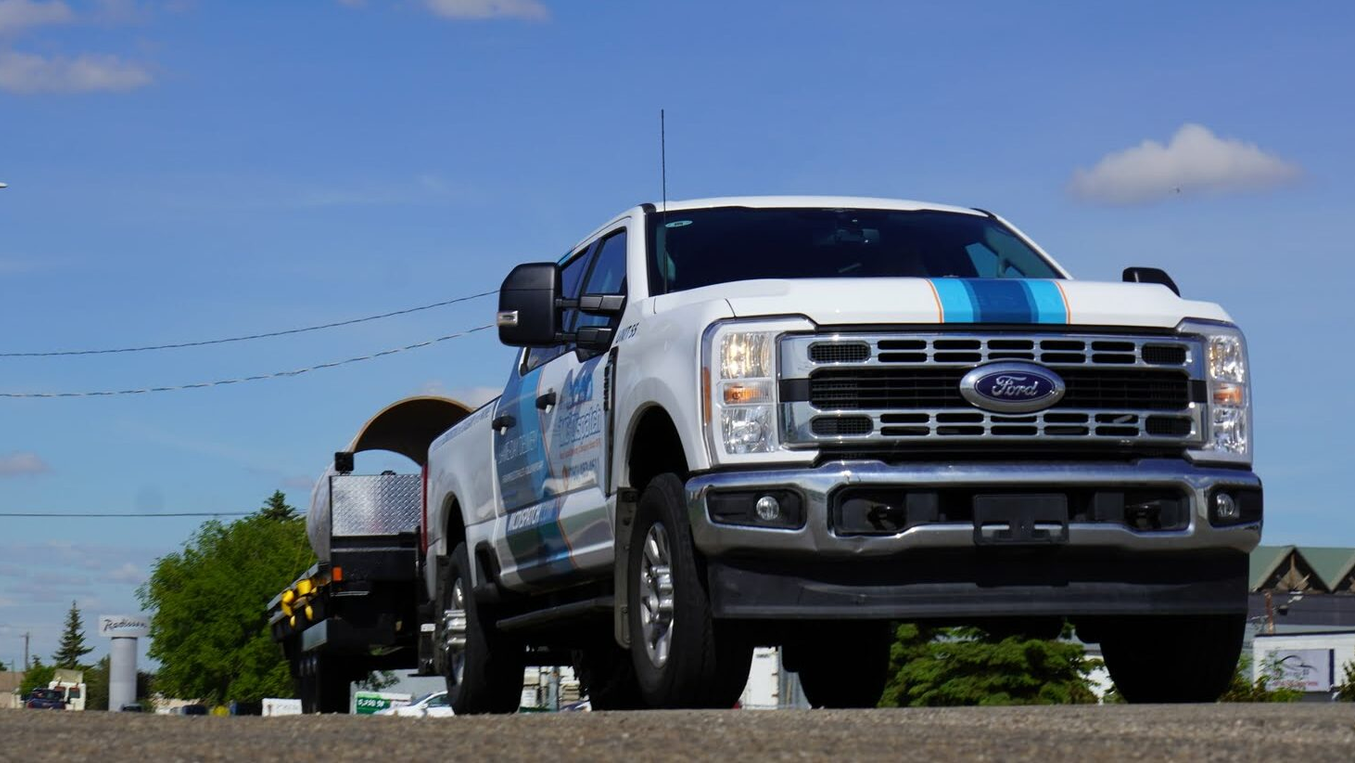
MC Dispatch lists Fort McMurray among its province-wide daily run locations, and province-wide runs start at $85 per trip on its published rates. Its hot shot service lists next-day service to Fort McMurray, so plan around next-day arrival rather than same-afternoon delivery.
The fleet ranges from cars and vans to 5-ton trucks with power tailgates, 53-foot dry vans, and flat decks, so the right vehicle depends on what you ship and how the site receives it. If a closure is forecast, freight can be staged in Edmonton instead of sitting on the highway. MC Dispatch offers warehousing without long-term contracts, which suits short holds of a few days.
Need a number for your budget? Review MC Dispatch’s published rates on the pricing page, then request a quote for your Fort McMurray shipment. Long-distance pricing depends on size, weight, vehicle type, and timing.
48-Hour Pre-Shipment Checklist for Winter Freight to Fort McMurray
Work through these steps two days before any winter shipment north. Each one removes a common cause of delay or damage.
- Rate the shipment on the Risk Ladder and flag Rung 3 or 4 to dispatch.
- Check the corridor: the three-day forecast for Edmonton, Wandering River, and Fort McMurray, plus current 511 Alberta conditions.
- Work back from the real need date and set the ship date with the buffer from the table.
- Confirm freeze limits on labels or safety data sheets, and mark sensitive cartons on at least two sides.
- Pack for cold with insulated pallet covers, sealed liquids, and cold-rated stretch wrap, since standard film can lose cling in extreme cold.
- Send full site details: gate or building, receiving hours, PPE or orientation needs, and an on-site contact who answers the phone.
- Confirm handling: dimensions, weight, and whether the site has a dock and forklift or needs a liftgate.
- Agree on a hold plan: wait at origin, return, or stage in a warehouse if the highway closes.
- Share tracking with the receiver so they can plan staff and equipment.
Common Mistakes Shippers Make on the Winter Fort McMurray Run
- No buffer. One closure or ice storm turns an on-time plan into a missed shutdown window.
- Treating a mixed load as cold-tolerant. One case of adhesive changes how the whole pallet should ship.
- Shipping freeze-sensitive goods late in the week. If the site does not receive on weekends, freight can sit until Monday.
- Checking weather only in Edmonton. Conditions near Mariana Lake can be very different from the city.
- Incomplete site details. A missing gate name, contact, or orientation requirement can stop a delivery at the gate.
- Signing without inspecting. Freeze damage is harder to claim once the delivery record is signed clean.
- Pushing for a run during a closure. Closures are enforced at the road, so pressure adds risk without saving time.
What To Do If Something Goes Wrong
If the highway closes while freight is in transit
- Check tracking and confirm with dispatch where the vehicle is holding.
- Tell the receiver right away and reset the expected delivery window.
- For Rung 3 or 4 freight, decide with dispatch whether to continue once the road reopens, return to Edmonton, or stage the load.
If freight arrives frozen or damaged
- Note the issue on the delivery record before signing, such as frost inside packaging, bulging containers, or cracked pails.
- Photograph the packaging, labels, and pallet before anything is moved.
- Set the product aside and do not use it until it is checked against the manufacturer’s guidance.
- Contact the carrier the same day with photos and the order or bill of lading number.
- Keep all packaging until the claim is resolved.
If delivery misses a critical deadline
- Ask about a dedicated hot shot for the most urgent items, such as a single replacement part.
- Check whether a Fort McMurray supplier can cover the gap until the main shipment arrives.
Already have freight on the road? Track your delivery or call MC Dispatch in Edmonton at (780) 483-4611 for a status update.
Frequently Asked Questions
How long does freight take from Edmonton to Fort McMurray in winter?
The drive is roughly 430 km, and MC Dispatch lists next-day hot shot service to Fort McMurray. A closure or ice storm can add a day or more, as seen when Highway 63 closed for over a day in April 2026. Plan at least one extra business day for winter shipments.
Will my freight freeze during a winter delivery?
It can if it contains water and sits in an unheated vehicle during a long hold. Cargo areas in standard vans and dry trailers drift toward the outside temperature over several hours. Insulated packaging and avoiding overnight holds lower the risk.
What happens if Highway 63 closes while my shipment is on the road?
The vehicle waits at a safe location until the province reopens the highway, or returns to origin if that makes more sense. Track the shipment, tell your receiver, and agree on next steps with dispatch.
How can I check Highway 63 road conditions before shipping?
Use 511 Alberta, the province’s official road report, on its website or app, or dial 511 in Alberta. It shows closures, incidents, highway cameras, and roads where travel is not recommended.
Which items should not ship in an unheated vehicle in winter?
Water-based paints, latex sealants, adhesives, beverages, some cleaning chemicals, certain medical supplies, and some batteries are common examples. Check the product label or safety data sheet for freeze limits before booking.
Does MC Dispatch deliver from Edmonton to Fort McMurray?
Yes. MC Dispatch lists Fort McMurray among its province-wide daily run locations and offers next-day hot shot service there. Contact the team for a quote based on your freight and timing.
How much buffer should I add for winter freight to Fort McMurray?
Add at least one business day for cold-tolerant freight with a flexible date. Add one to two days for anything tied to a shutdown or site deadline, and plan freeze-sensitive, urgent freight with your carrier several days ahead.
Conclusion
Winter freight on Highway 63 rarely fails because of distance. It fails because of closures, holds in the cold, and site details nobody confirmed. Rate each shipment by freeze risk and deadline, add a realistic buffer, pack for the cold, and agree on a hold plan before the truck leaves Edmonton.
Ready to ship north? MC Dispatch runs province-wide deliveries that include Fort McMurray, with hot shot options for urgent freight. Share your freight details and deadline, and an account manager will help you plan around winter conditions. Request your quote today.